
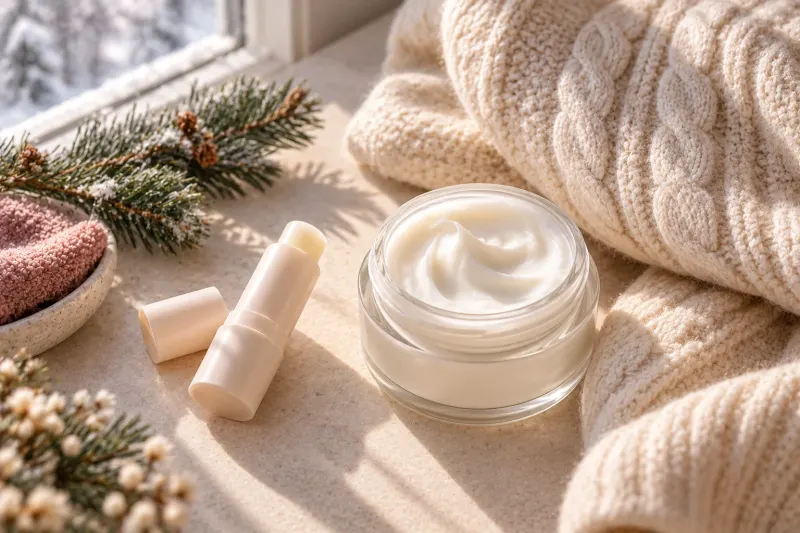
It happens every year. The first cold week arrives, the heating comes on, and suddenly the routine that felt perfect all summer isn’t enough. Your face feels tight after washing. Makeup clings to dry patches. Your lips crack, your hands feel rough, and the moisturizer you loved seems to disappear within an hour.
It’s easy to assume you need a whole new set of products. Usually, you don’t. Winter skin mostly needs the same basic routine with a few small adjustments: a gentler cleanse, a richer moisturizer, and a bit more care with water and heat. Here’s what changes, why, and what to do about it.
Why skin gets drier in winter
Your skin’s outer layer holds on to water to stay soft and comfortable. In winter, several things work against it at once:
- Cold outdoor air usually holds less moisture, so it pulls more water from your skin.
- Indoor heating dries out the air inside your home and office, often for hours at a time.
- Wind can leave exposed skin, like your cheeks and lips, feeling raw and chapped.
- Long, hot showers feel wonderful when it’s cold, but hot water can strip away some of the oils that help your skin hold moisture.
The result is skin that loses water faster than usual. That’s why even oily and combination skin can feel tight or flaky in winter. Your skin type hasn’t changed; the conditions around it have.
The simple swaps that help most
Start with these. For many people, they’re enough on their own.
Switch to a gentler cleanser
If your face feels tight or squeaky after washing, your cleanser may be too strong for winter. A creamy or non-foaming cleanser is usually kinder. In the morning, a splash of lukewarm water may be all you need.
Move up one moisturizer texture
If you use a gel, try a gel-cream or lotion. If you use a lotion, try a cream. Our guide to choosing a moisturizer for your skin type explains the textures.
Moisturize while your skin is still damp
Apply moisturizer within a few minutes of washing your face or getting out of the shower, while your skin is still slightly damp. It helps lock in some of that water.
Keep showers short and lukewarm
Turning the temperature down a little and keeping showers short is one of the easiest ways to reduce winter dryness, for your face and your body.
Keep wearing sunscreen
UV rays reach your skin even on cold and cloudy days, and snow can reflect them back up at you. The American Academy of Dermatology recommends broad-spectrum SPF 30 or higher on exposed skin all year.
How to adjust for your skin type
Everyone’s skin gets a bit drier in winter, but how much you need to change depends on where you start.
| Skin type | What often happens in winter | What to try |
|---|---|---|
| Oily | Less shine, but tightness after washing | A gentler cleanser; a gel-cream or light lotion instead of a gel |
| Combination | Cheeks get dry while the T-zone stays shiny | A richer moisturizer on the cheeks only; keep the T-zone light |
| Normal | Occasional tightness or rough patches | A slightly richer cream, especially at night |
| Dry | Flaking, tightness, dull or rough texture | A rich cream; a thin layer of balm on very dry patches at night |
Not sure which type you are? The Skin Type Quiz takes about two minutes. Winter is a good time to take it with your baseline in mind: think about how your skin behaves on an average day, not just this week.
Don’t forget your lips, hands and body
Lips
Lips have very little natural protection and chap quickly in cold, windy weather. Use a simple lip balm often, especially before going outside and at bedtime. If your lips sting, a fragrance-free balm is often more comfortable. Try not to lick your lips; it makes dryness worse as the moisture evaporates.
Hands
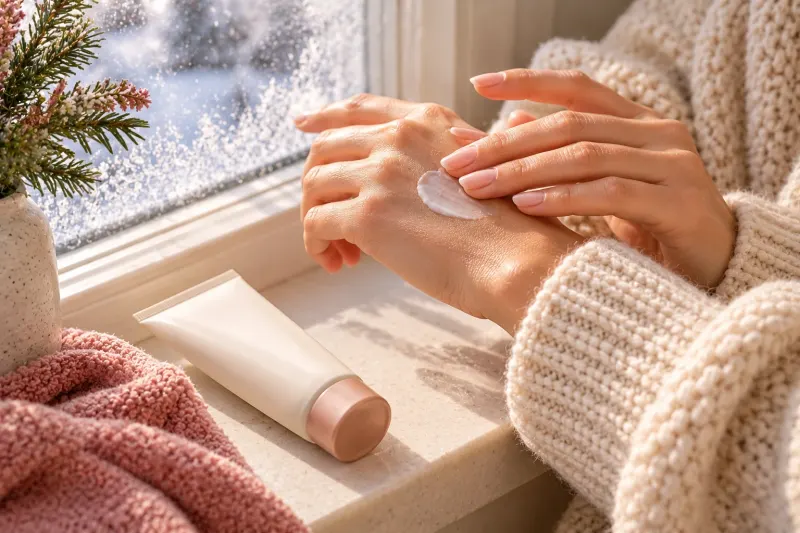
Frequent hand washing plus cold air is hard on hands. Keep a hand cream by the sink and apply a little after each wash. Gloves outdoors help more than you might expect.
Body
Apply a body cream or lotion right after you towel off, while your skin is still damp. Richer creams usually work better than light lotions in winter. Pay extra attention to shins, elbows and knees, which often get dry first.
Help the air in your home
Because indoor heating dries the air, what you do at home matters as much as what’s in your routine. A humidifier in your bedroom can make the air feel more comfortable while you sleep; keep it clean and follow the maker’s instructions. It also helps to keep the heat at a comfortable, not tropical, temperature and to avoid sitting right next to heaters or vents for long periods.
What to ease off on in winter
Sometimes winter skin needs less, not more.
- Scrubs and strong exfoliants. If your skin is flaky, it’s tempting to scrub the flakes away, but that can leave dry skin more irritated. Exfoliate less often, and gently, until your skin feels comfortable again.
- Several strong “active” products at once. If products that felt fine in summer start to sting, use them less often for a while. If a product came from your doctor, ask them before changing how you use it.
- Heavily fragranced products. Dry, sensitive winter skin can react more easily. A fragrance-free moisturizer is a sensible choice if you notice stinging.

A simple winter routine
Here’s what a winter routine might look like. It follows the same order as any routine; see what order to apply skincare if you’d like the details.
| Step | Morning | Night |
|---|---|---|
| Cleanse | Lukewarm water or a gentle, creamy cleanser | Gentle, creamy cleanser |
| Moisturize | A cream or richer lotion on damp skin | A rich cream; balm on very dry patches |
| Protect | Broad-spectrum SPF 30 or higher | Lip balm before bed |
Start with your skin type
How much you need to change in winter depends on how your skin behaves the rest of the year. If you’re not sure whether you lean oily, dry or combination, that’s the best place to start.
When to see a professional
If your skin cracks or bleeds, itches enough to disturb your sleep, or develops red, scaly or rash-like patches that don’t improve with a gentle routine and a good moisturizer, see a board-certified dermatologist. Some skin conditions tend to flare in winter and may need more than everyday skincare.
Common questions
Should I use a different moisturizer in winter?
Often, yes, but it doesn’t have to be a big change. Many people simply move one step richer, from gel to lotion or lotion to cream, and switch back when the weather warms up.
Do I need sunscreen in winter?
Yes. UV rays reach your skin year-round, even when it’s cloudy, and snow can reflect them. A broad-spectrum SPF 30 or higher on exposed skin is still recommended.
Why does my oily skin feel dry in winter?
Oil and water aren’t the same thing. Your skin can still make oil while losing water to cold, dry air. A gentler cleanser and a slightly richer moisturizer usually help.
When should I switch back to my summer routine?
When your skin starts to feel greasy or heavy with your winter products, usually as the weather warms up in spring. Switch one product at a time.
The bottom line
Winter skin rarely needs a whole new routine. Wash more gently, moisturize one step richer while your skin is still damp, keep showers short and lukewarm, and keep wearing sunscreen. Look after your lips and hands too, and ease off anything harsh until your skin feels comfortable again. If you’re not sure where to start, the Skin Type Quiz can help you find your baseline.
Want to come back to this later?
Save to Pinterest (opens in a new tab)