
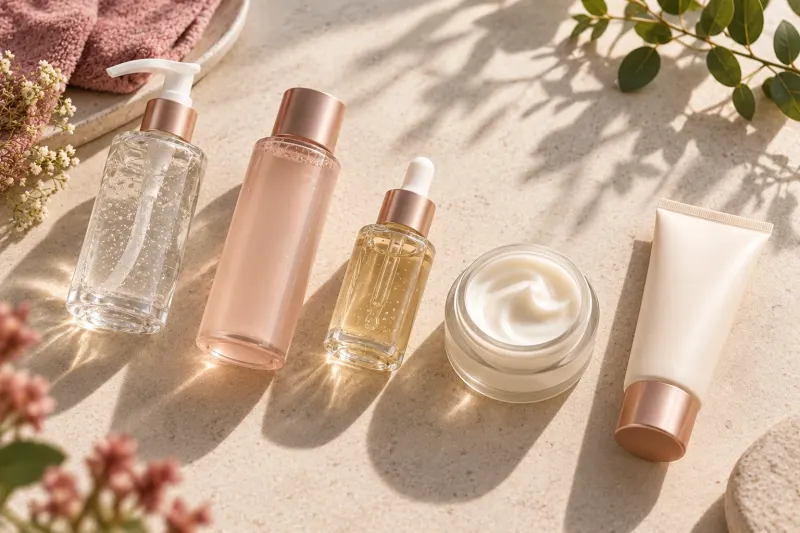
You’ve got a cleanser, a serum someone recommended, a moisturizer and a sunscreen lined up by the sink. They all seem useful. But standing there in the morning, the questions start: Does the serum go before or after moisturizer? Is sunscreen a separate step if my moisturizer has SPF? Should I wait between each one? And where does makeup fit in?
It’s a small decision, but it matters more than it seems. Put things on in an order that fights itself and a product may not spread well, may pill into little flakes, or may simply not do its job. The good news is that there’s one simple rule behind almost every routine, and once you know it, you won’t need to look this up again.
The one rule to remember
Apply your products from the thinnest, most watery texture to the thickest, richest one.
Light, water-based products like toners and most serums go on first, closer to your skin. Heavier products like creams and oils go on after, where they can help hold everything underneath in place. If you did it the other way around, a thick cream could make it harder for a thin serum to spread evenly on your skin.
There’s one important exception: in the morning, sunscreen always goes last in your skincare, even if it’s thinner than your moisturizer. It needs to sit on top as an even layer to protect your skin, so nothing else should go over it except makeup.
Your morning routine, step by step
A morning routine is mostly about preparing your skin for the day and protecting it. You don’t need every step. The only ones most people need are cleansing (or just rinsing), moisturizing if your skin wants it, and sunscreen.
Cleanse
Use a gentle cleanser, or just rinse with lukewarm water if your skin is dry or you cleansed well the night before.
Toner (optional)
If you use one, apply it right after cleansing. Many people skip this step entirely, and that’s fine.
Serum or treatment (optional)
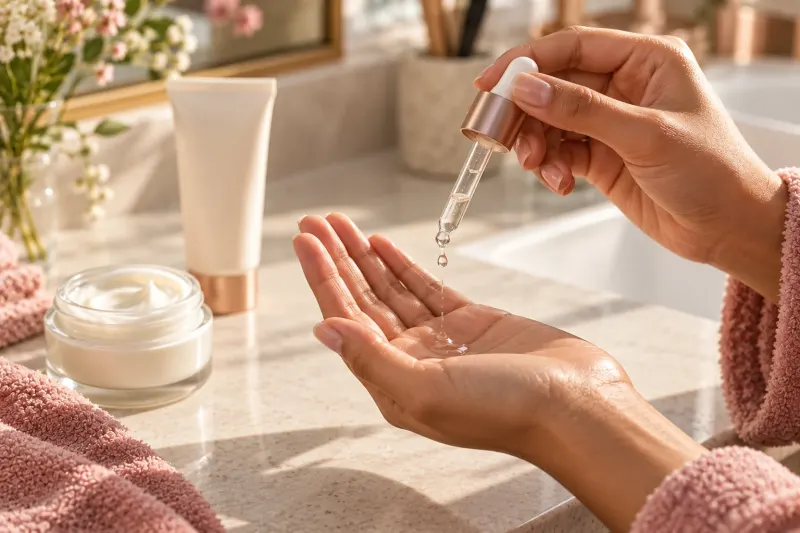
Watery or lightweight serums go here, while your skin is clean and before anything heavier.
Eye cream (optional)
If you use one, pat a small amount around your eyes before moisturizer.
Moisturizer
Choose a texture that suits your skin. Our guide to choosing a moisturizer for your skin type can help.
Sunscreen
Always the last skincare step. The American Academy of Dermatology recommends a broad-spectrum sunscreen with SPF 30 or higher on any skin not covered by clothing.
If your moisturizer has SPF
A moisturizer with broad-spectrum SPF 30 or higher can be your final step instead of a separate sunscreen. The catch is quantity: you need to apply enough to cover your whole face evenly, which is more than many people use of a moisturizer. If you tend to use just a thin layer, a separate sunscreen on top is the safer choice.
Your night routine, step by step
At night, the goal shifts from protecting your skin to cleaning it and letting any treatment products do their work. Sunscreen isn’t needed, so moisturizer (or oil) becomes the last step.
Remove makeup and sunscreen
If you wore makeup or water-resistant sunscreen, use a makeup remover, micellar water or cleansing balm first.
Cleanse
Follow with your regular gentle cleanser. Doing this after makeup removal is what people mean by “double cleansing.” It’s useful on heavy-makeup days, not a must every night.
Toner (optional)
Same as the morning, if you use one.
Treatment or serum
Night is when many people use their “active” products. If a product came from your doctor or pharmacist, follow the directions you were given, including when and how to apply it.
Eye cream (optional)
Pat it on before your moisturizer.
Moisturizer
Many people like a slightly richer texture at night than in the morning.
Face oil (optional)
Oils are usually the heaviest layer, so they go last. You can also mix a drop into your moisturizer.
| Step | Morning | Night |
|---|---|---|
| Remove makeup or sunscreen | Not needed | If you wore them |
| Cleanse | Gentle cleanser or a rinse | Yes |
| Toner | Optional | Optional |
| Serum or treatment | Optional | Optional, often here |
| Moisturizer | Yes, if your skin wants it | Yes, if your skin wants it |
| Face oil | Usually skipped | Optional, last |
| Sunscreen | Yes, last step | Not needed |
Where the less obvious products fit
Spot treatments
These usually go on clean skin, before moisturizer, so they’re in direct contact with the spot. Check the label, though. Some are designed to go on last.
Exfoliants
Leave-on exfoliating toners or serums follow the same “thin to thick” rule and usually go right after cleansing. You generally don’t need them every day. Start slowly and stop if your skin stings or looks red.
Sheet masks and wash-off masks
Wash-off masks go right after cleansing and are rinsed away. Sheet masks usually come after cleansing (and toner, if you use one). Pat in whatever is left on your skin, then moisturize.
Makeup
Makeup goes on after sunscreen, never under it. Give your sunscreen a few minutes to settle first. It helps your base go on more smoothly and stay put longer.
Do you need to wait between steps?
For most products, you don’t need a timer. A good rule is to wait until the last layer no longer feels wet, usually a minute or so. Rushing is one of the main reasons products pill or slide around.
Two exceptions are worth knowing:
- Sunscreen before going outside. The American Academy of Dermatology recommends applying it about 15 minutes before you head out.
- Product directions. If a label or your doctor tells you to wait a certain time or apply to fully dry skin, follow that.
Common layering mistakes
- Too many layers. More steps don’t mean better results. If products pill or your skin feels heavy, drop the steps you’re least sure about.
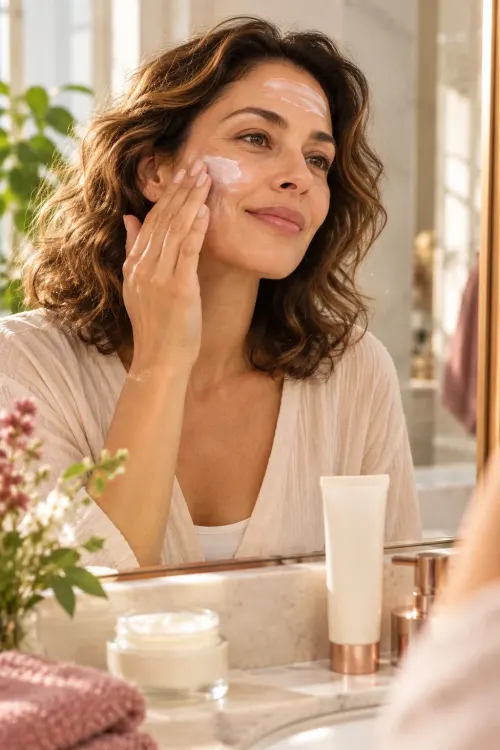
- Moisturizer on top of sunscreen. Anything creamy over sunscreen can thin it out or move it around. Moisturize first, then sunscreen.
- Adding several new products at once. If your skin reacts, you won’t know which one caused it. Add one at a time and give it a fair try.
- Using a lot of product. Most serums need only a few drops. Using too much wastes product and makes layering harder.
If your shelf has grown and you’re not sure what to keep, our guide to simplifying your beauty routine can help you cut back.
Build the routine around your skin
The order of steps is the same for everyone, but the products you choose for each step depend on your skin. Oily skin may prefer a gel moisturizer; dry skin may want a cream and skip the toner. If you’re not sure where your skin falls, start there.
When to see a professional
If your skin burns, stings or turns red every time you apply your routine, or you’re using prescription products and aren’t sure how to fit them in, ask a board-certified dermatologist or your pharmacist. They can tell you exactly how to use your specific products.
Common questions
Does serum go before or after moisturizer?
Before. Serums are usually thinner and more watery, so they go on first. Moisturizer then goes on top.
Should sunscreen go before or after moisturizer?
After. Sunscreen is the last skincare step in the morning, so it can form an even layer. Makeup comes after that.
Where does face oil go?
Usually last in your night routine, after moisturizer, since oils are the heaviest layer. In the morning, sunscreen still goes on top of everything else.
Do I need all of these steps?
No. For many people, a gentle cleanser, a moisturizer and a daily sunscreen are enough. The other steps are optional extras.
The bottom line
You don’t need to memorize a complicated chart. Go from thinnest to thickest, put sunscreen last in the morning and makeup after that, and give each layer a moment to settle. Keep the routine as short as your skin allows. If you’re still choosing products for each step, the Skin Type Quiz is a quick way to find your starting point.
Want to come back to this later?
Save to Pinterest (opens in a new tab)