
Picture the skincare aisle: one moisturizer says “for oily skin,” the one next to it says “for dry skin,” and you realize you honestly don’t know which one is meant for you. So you pick the one with the nicer packaging, or the one a friend swears by, and hope for the best.
If that sounds familiar, you’re in good company. A lot of us chose a skin type years ago, maybe from a magazine quiz or a comment at a makeup counter, and never checked it again. But that label quietly shapes almost every product you buy. Get it wrong, and you can end up with a cleanser that leaves your cheeks tight, or a cream that feels greasy by lunch, and conclude that “nothing works on my skin.”
You don’t need a gadget or a special test to sort this out. Your skin gives you clues every day. The trick is knowing which ones to pay attention to, and which ones are sending you in the wrong direction.
What “skin type” actually means
Your skin type describes how your skin tends to behave on an ordinary day: mostly, how much oil it makes and how comfortable it feels. There are four general types:
- Normal: comfortable most of the day. Not much shine, not much flaking, and pores that aren’t very noticeable.
- Dry: makes less oil. It often feels tight after washing and can look dull, rough or flaky, especially in cold or dry weather.
- Oily: makes more oil. It tends to look shiny across most of the face by midday, and pores are easier to see.
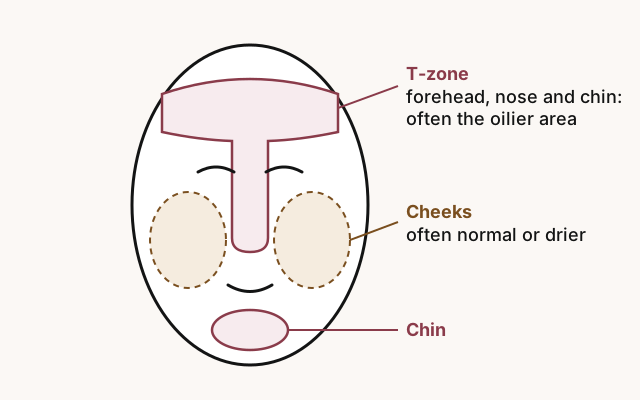
- Combination: a mix. The forehead, nose and chin (the “T-zone”) get oily, while the cheeks stay normal or feel dry.
Notice what isn’t on that list: sensitive, acne-prone, mature. Those words describe concerns, not types. Mixing the two up is one of the most common reasons people misjudge their skin, so we’ll come back to it.
The clues your skin gives you every day
You’ll learn more from paying attention for a few ordinary days than from studying your face in a magnifying mirror once. These moments are the most telling.
Right after you wash your face
If your skin feels tight or pulled, it may lean dry. If it feels fine, it’s probably normal or oily. One catch: a harsh cleanser can make any skin feel tight, so pay attention to what you washed with, not just how your skin feels. This is also why it helps to wait a while before judging (more on that below).
Where the shine shows up by midday
Midday is a good moment to check, because by then your skin has had time to show its natural pattern. Shine only on your forehead, nose and chin points toward combination skin. Shine that also reaches your cheeks points toward oily. Very little shine anywhere suggests normal or dry.
How your makeup or sunscreen wears
Your base products are surprisingly honest. Foundation that clings to dry patches or looks cakey around your nose and cheeks suggests dryness. Makeup that slides off your nose and forehead but stays put elsewhere suggests combination skin. If it breaks up or looks shiny all over within a few hours, your skin is likely on the oilier side.
How different areas compare
Instead of asking “Is my skin oily?”, ask “Is my skin equally oily everywhere?” Plenty of people decide they have oily skin because their nose is shiny, when their cheeks are actually quite dry. That gap between areas matters more than any single spot.
How your skin changes through the year
Many people find their skin feels drier in winter and oilier in summer. That’s normal, and it doesn’t mean your type keeps changing. What you’re looking for is your baseline: how your skin behaves on an average day, in average weather, when nothing unusual is going on.
A simple way to check at home
If you’d like a clearer answer, try this “bare face” check. Do it on a regular day, not right after trying a new product, getting a sunburn or a facial, or while you’re sick or traveling.
- Wash gently. Use a mild cleanser and lukewarm water, then pat your face dry.
- Skip everything else. No toner, serum, moisturizer or makeup for now.
- Wait 30 minutes to an hour. Go about your day. Right after washing, your skin mostly reflects the cleanser; after a while, it reflects you.
- Look and feel, ideally in daylight. Check your forehead, nose, chin and cheeks separately.
| What you notice | Usually points to |
|---|---|
| Tight, rough or flaky, with little or no shine | Dry |
| Comfortable and even, with maybe a hint of shine on the nose | Normal |
| Shine on the forehead, nose and chin, but not the cheeks | Combination |
| Shine across most of the face, including the cheeks | Oily |
Want a second clue? Gently press a clean tissue or blotting paper on each area and look for oil marks. Then, most importantly, repeat the whole check on two or three different days. One check is a snapshot; a few checks show you a pattern, and the pattern is what you’re after.
Skin type isn’t the same as a skin concern
This is where a lot of confusion comes from. Your skin type is your baseline. Concerns are things that can show up on top of it, and most of them can happen with any type.
Dry vs. dehydrated
These sound like the same thing, but they’re usually described differently. Dry skin makes less oil; it’s a type. Dehydrated skin is short on water; it’s a temporary state that can come from weather, indoor heating or harsh products. Oily skin can be dehydrated too, which is why some people notice their skin looks shiny but still feels tight.
Sensitivity
Stinging, burning or redness when you apply products can happen with any skin type. Sometimes it’s a sign that a particular product or ingredient doesn’t agree with you, rather than something about your type.
Breakouts
Breakouts are often linked with oily skin, but dry, normal and combination skin can break out too. So breakouts on their own don’t tell you your type.
Redness and signs of aging
Ongoing redness and flushing are worth looking into separately; they aren’t a skin type. Fine lines and changes in firmness happen with every type, and many people find their skin gets drier with age. That’s one more reason to recheck your skin type now and then.
When to see a professional
A skin type check can’t identify skin conditions. If you have redness that doesn’t fade, burning or itching, rash-like patches, painful breakouts, or any change that worries you, a board-certified dermatologist is the right person to ask.
Still not sure? A few guided questions can help
The bare-face check is useful, but it asks you to remember and weigh a lot of small signals at once. And most of us have mixed evidence: an oily nose, cheeks that get dry in winter, makeup that behaves differently depending on the day.
That’s why we built the Loviax Skin Type Quiz. It asks about the same everyday clues covered here, including how your skin feels after washing, where shine shows up, how makeup wears and how your skin changes with the weather, and weighs them together. If your answers point to two types, it tells you which one is “also close,” which is often the most honest answer you can get.
What to do once you know your skin type
Knowing your type won’t tell you exactly which products to buy, but it makes choosing a lot simpler. A few ways to put it to use:
- Use it as a filter, not a rulebook. A “for oily skin” label is mostly a hint about texture: lighter, gel-like products for oilier skin, richer creams for drier skin. You don’t have to buy only products with your type on the label.
- Start with the basics. A gentle cleanser, a moisturizer in a texture your skin likes, and a broad-spectrum sunscreen with SPF 30 or higher every morning, which is what the American Academy of Dermatology recommends. Our simple routine for every skin type walks through it.
- Change one thing at a time. When you add a new product, give it a fair amount of time before adding another. Otherwise it’s hard to tell what’s helping and what isn’t.
- Check in when the seasons change. If a routine that felt great in summer starts to feel wrong in winter, your skin may just need a richer moisturizer for a while.
If your routine still feels unpredictable, it may be worth reading about the common skin type mistakes that make skincare more confusing. And when you’re ready to shop, our guide to choosing beauty products without getting overwhelmed will help you narrow things down.
The bottom line
Your skin type isn’t a verdict about your skin. It’s a starting point that makes the next decision a little easier. Spend a few ordinary days noticing how your skin behaves, try the bare-face check once or twice, and use the Skin Type Quiz if you want a second opinion. Then let what you’ve learned, rather than the loudest recommendation online, guide what you try next.
Want to come back to this later?
Save to Pinterest (opens in a new tab)